What’s your face shape? measured from one photo, in numbers
Upload a front-facing portrait and AI measures the width of your forehead, cheekbones and jaw and the length of your face. From those numbers it matches your outline to one of seven shapes, flags a mix if there is one and puts together haircut, bangs, frame, earring and neckline picks for your lines.
Seven face shapes
Stylists describe a face by three widths and one length. Tap a shape to see its typical proportions, the signs to look for and how to balance it.
Typical numbers for this shape. Every face has its own.
Oval face
Cheekbones a touch wider than the forehead, a jaw that tapers to a rounded chin, length about one and a half times the width.
- Your face is about 1.4-1.5 times longer than it is wide at the cheekbones.
- The cheekbones are the widest line, but only by a little.
- Your forehead is slightly wider than your jaw.
- The chin is rounded, with no sharp point and no flat, square base.
- The jaw corner is soft: you can see it in the mirror, but it does not form a step.
The styling ideaKeep proportions that are already balanced and choose one feature to highlight, rather than stretching or widening the face.
How to find your face shape yourself
You need a tape measure and a mirror, or a front-facing photo and a ruler held to the screen. Four measurements show what the AI sees.
- 1Forehead: measure across the widest part, roughly halfway between your brows and your hairline, edge to edge.
- 2Cheekbones: find the highest points just below the outer corners of your eyes and measure between them.
- 3Jaw: the distance between the corners of your jaw, just under the earlobes. This is awkward with a tape, so it is easier to take from a photo.
- 4Length: from the center of your hairline to the tip of your chin. If your hairline has receded, use the point where the forehead starts to curve back toward the crown.
How to read the measurements
- Compare the three widths. Cheekbones widest, forehead and jaw a little narrower: oval. Cheekbones clearly wider than both, with a pointed chin: diamond. Jaw widest: pear. Forehead widest with a narrow chin: heart.
- Divide the length by the cheekbone width. Up to about 1.25 is a short face (round or square), 1.3 to 1.55 is medium, and 1.6 or more is long (oblong).
- Check the corners: a soft, curved jaw points to round or oval, a crisp angle to square or oblong. If you match two shapes equally, you have a mixed shape, which is very common.
A tape wraps around the face and gives bigger numbers than a ruler on a photo. Compare your lines with each other, not with the percentages in your results.
What the AI reads: four lines and five traits
The widths and the length are measured by a face landmark detector right in your browser, and the model adds the outline traits and photo conditions. The tips come from our own guide based on that data, so the same lines always get the same tips.
Proportions in numbers
- Forehead widthat its widest, halfway between the brows and the hairline0-100
- Cheekbone widthbetween the highest points of the cheekbones, below the outer corners of the eyes0-100
- Jaw widthbetween the jaw angles below the earlobes0-100
- Length to widthhairline to chin, against cheekbone width1.1-1.4
Widths are percentages of the widest line, which is always 100. That way the numbers do not depend on how large the face is in the frame.
Outline traits
- Jawlinesoftbalancedangular
- Chinroundedpointedsquarelong
- Hairlineroundedstraightwidow's peaknot visible in the photo
- Cheekbonessoftprominent
- Forehead heightlowmediumhigh
And what gets in the way on a photo:Head tiltFace turnedHair covers the outlineBeard covers the jawGlassesLens distortionExpressionLow lightFace cropped
How to take the photo so the outline reads clearly
Small things change the shape on a photo: a tilt of a couple of degrees, a phone right under your nose, a strand along the cheek. A good shot takes a minute.
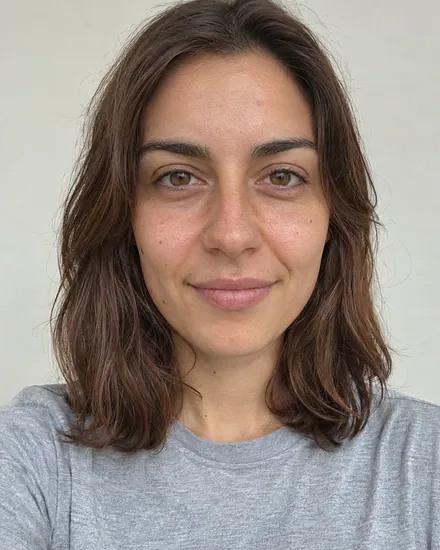
Outline reads clearly
- Face straight on, eyes on the lens
- Hair tucked behind ears and off the forehead
- Camera at eye level, at arm's length or a few feet away
- Even daylight from the front
- No glasses, hat or big earrings
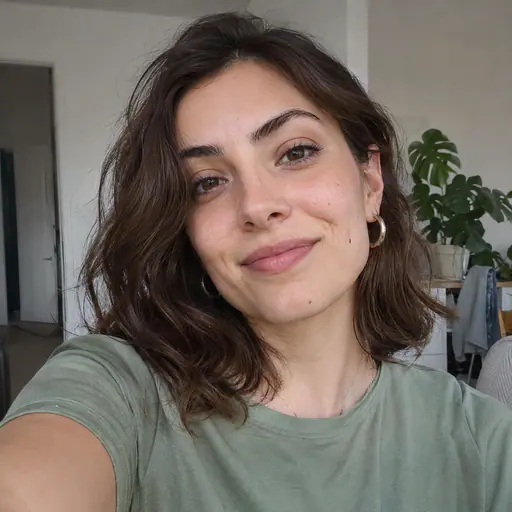 cheekbonesTilt and a close cameraone cheekbone looks wider, the middle of the face swells
 cheekbones, jawHair at the cheeksthe cheekbones and jaw angles are hidden
 jawA big smilecheeks lift, the lower face widens
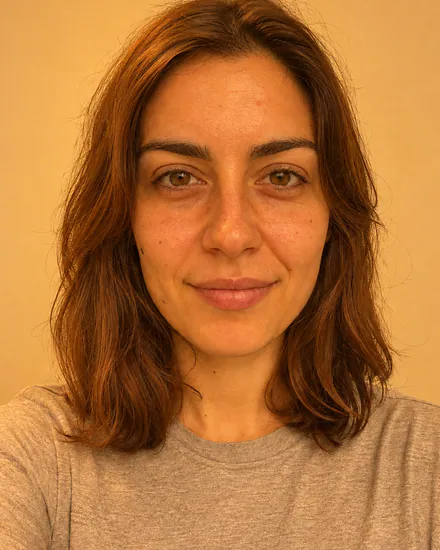 forehead, jawLight from aboveshadows eat the edge of the face
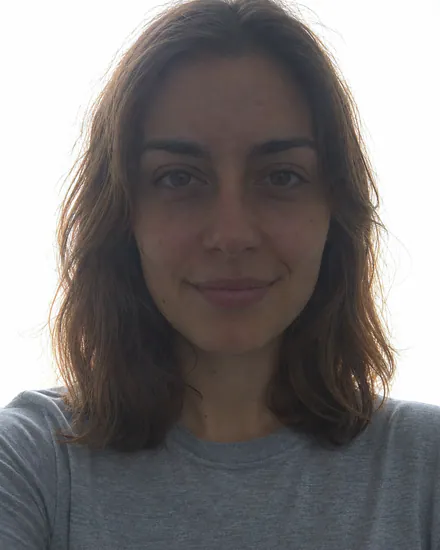 forehead, cheekbones, jawBacklightthe outline melts into the background
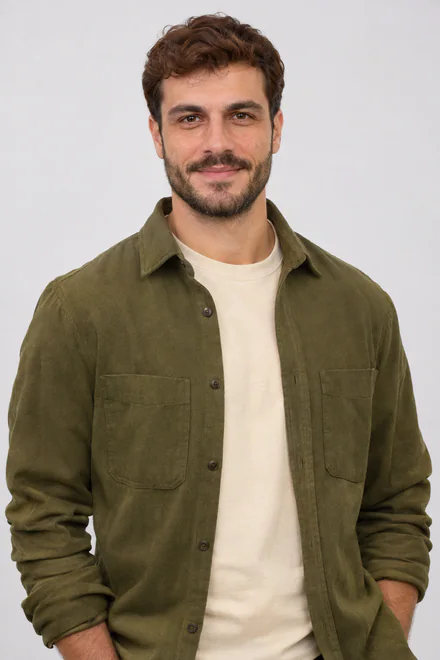 jawA beardhides the jaw angles, the analysis will note it
What you get
The basic analysis is free. The report stays on the page, and once you sign in it is saved to your account.
- 7shapes in the spectrummain, second and how close you are to each
- 4lines in numbersforehead, cheekbones, jaw and length on the diagram
- 5outline traitsjawline, chin, hairline, cheekbones, forehead height
- 6-7tip sectionshaircuts, bangs, frames, earrings, necklines, brows, makeup or beard
- 2points of viewfor her and for him, switch any time
- 1myth about your shapeand what is actually true
What haircut suits your face shape
A cut that ends at the widest line stresses it, volume above or below balances it. Here is the first tip from each shape’s report; the analysis gives you more.
- Oval face
A chin-length bob with a side part shows off the cheekbones and jaw.
For him: A classic side part, slightly longer on top than on the sides.
- Round face
Long layers that begin below the chin draw the face downward and show the cheekbones.
For him: An undercut or fade with short sides and volume on top: the face instantly looks longer.
- Square face
Long layers with the first step at the chin round off the lower corners.
For him: A square face suits nearly every short cut: crew cut, Ivy League, a short crop.
- Oblong face
Chin- to shoulder-length: a bob or lob with fullness at the sides.
For him: Moderately short sides with medium length on top, styled forward or to the side.
- Heart-shaped face
A bob at the chin or just below, with the ends flipped out or turned under.
For him: Medium length on top, styled forward or to the side, with fringe partly covering the forehead.
- Pear-shaped face
Lift at the roots and the crown, for example a layered cut with texture on top.
For him: Volume on top and a bit more length at the upper sides: a quiff or textured styling.
- Diamond face
A chin-length bob with fullness at the ends widens the lower face.
For him: Medium length on top with fringe styled forward or to the side.
- Not sure of your shape?
The photo analysis takes a minute and builds the tips around your lines.
Upload a photo
Frequently asked questions
How accurate is a face shape detector from a photo?
As accurate as the photo allows. A face landmark detector measures the lines, and with a front-facing shot in even light and hair pulled back the shape usually matches a check at the mirror. A tilt, a turn, a front camera held close or a strand along the cheek shift the lines; the report then lists them under photo conditions and lowers its confidence. A tape gives bigger numbers than a photo, so when you check, compare the lines with each other.
What haircut suits my face shape?
Pick a cut by the line you want to balance. Round and square faces do well with height and layers below the chin, long faces with bangs and volume at the sides, heart and diamond faces with volume around the chin. The report collects tips for your shape and your traits, separately for her and for him.
What glasses suit my face shape?
Start with width: the frame should be about as wide as your cheekbones, not narrower. Then go for contrast with the outline. Angular frames add structure to a soft face, curves soften an angular one, and with a wide forehead a frame with a stronger lower rim looks lighter. The report lists the frames worth trying for your shape and the ones to be careful with.
Can you have two face shapes?
Yes, and it is common. For example, oval proportions with a defined jaw angle like a square. That is why the report shows the spectrum of all seven shapes and names a second one when it stands out. The tips for your main shape come first, and where both shapes agree, that pick is the safest.
How do men find their face shape?
The same way, by four lines: men and women share the same face shapes. The report has a for her / for him switch, and for him you get haircuts and beard shapes instead of bangs and makeup. A beard hides the jaw angles, so for an exact answer use a photo with short stubble or none.
Why do two photos give different shapes?
The model sees a photo, not a head in 3D. A wide-angle camera held close swells the middle of the face, an angle from below makes the jaw heavier, a smile lifts the cheeks. The difference is usually between neighbors: oval and oblong, round and square. Take a photo following the tips above, and if in doubt, check the four lines with a tape.
Does face shape change with age or weight?
The base of the outline is set by bone and barely changes over the years. Weight and age mostly change soft tissue: the cheeks and the line under the jaw. After noticeable weight loss a face can read closer to a neighboring shape, say round turning oval, but it rarely becomes a different shape altogether.
Is this a rating of my looks?
No. None of the seven shapes is better than another, oval included: it is simply the middle point of the scale, handy for describing the others. The analysis gives no scores and does not judge character by features. It answers a practical question: which haircut, frames and details work with your lines.
What happens to my photo?
The photo is used only for the analysis you started and is never published. The result goes to your account only if you press Save, and you can delete it any time. Upload your own photo or one of someone who agreed to the analysis. The face lines are measured right in your browser: the face points are not sent anywhere, only the final numbers and the photo itself go to the server for the analysis.
More photo analyses
 LiveYour Kibbe typeThe lines of your figure and face: which of 13 types is closest and how to echo it in clothes.
 LiveColor analysis from a photoUndertone, contrast and one of 12 seasons: a palette for clothes, frames and makeup.
 LiveFace ageHow old you look in a photo and what in the frame moves the number.
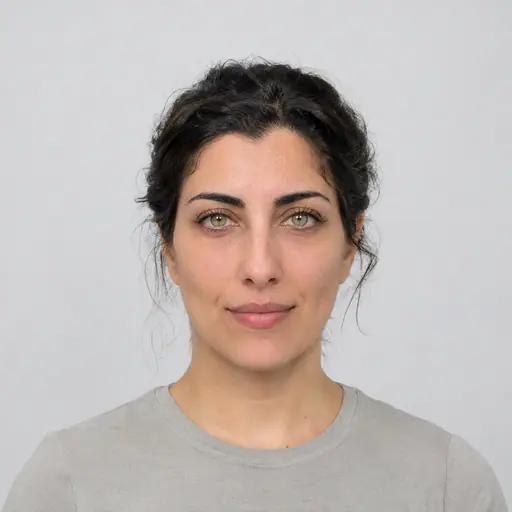 LiveEye colorThe exact shade of your iris, and the clothing and makeup colors that make it stand out.AI photo analysisAll analysesWhat works now and what is coming: body type, hair color, makeup.