in-house method
Career test:
your best-fit career and its future
The test matches what you enjoy and what comes easily to you against twenty fields of work, from kitchens and healthcare to AI and space. Students and adults get a top career, their best fields and a demand outlook for 2030, 2040 and 2050, free and right away.
What you get
The report opens right after the test, and you can save it to your profile
- Your top career and whyThe best match among careers where demand holds up through 2040, explained with your own answers: what you enjoyed, what you are good at, which conditions suit you.
- A compass of 20 fieldsEvery field around a circle with a match percentage. You see at a glance where you are drawn most and which areas leave you cold.
- 10 more careers with an outlookCareers from different fields, each with its entry path (courses, vocational college or university) and three demand marks: 2030, 2040 and 2050.
- Strengths and your ideal jobEight abilities as you rate them and the conditions you work best in: at a computer or on site, on a team or on your own.
- Where to go nextIf a career close to you is losing demand, the test points to a related one that is growing. Plus small experiments to test your choice before you enroll or retrain.
Sample result
This is the first screen of your result: top career, the field compass and the job outlook.
Robotics engineeryour best-fit career
The pleasure of building something that moves, lights up or computes, and knowing why it works
- Engineering94%
- IT78%
- Design70%
- 2030Strong growth
- 2040Strong growth
- 2050Strong growth
Engineering & Robotics
Illustrative sample result
How the test works
- 1Answer honestlyDon't think about salary or where to study. If an activity is new to you, imagine trying it for a day.
- 2The compass builds as you goWhile you answer, the fields that resonate most light up on a circle of 20. It is a preview: the final result is calculated after your last answer.
- 3Results right awayYou will see your top career, your fields, careers with an outlook and next steps. You can save the result to your account and come back to it later.
- 1Questions 1-50What interests you40 questions
40 activities, two from each field, from cooking a new dish for guests to calculating a satellite orbit. You rate how interesting each one is.
Activities: how interesting
- 1Not at all interested
- 2Not very interested
- 3Not sure
- 4Somewhat interested
- 5Very interested
- 2Situations14 questions
Every fifth question asks you to pick one of four options. These show which conditions and values matter to you and how long you are willing to study.
- 3Questions 51-70Your strengths16 questions
16 statements about what you are good at: logic, words, visual thinking, hands-on skills, people, stamina, accuracy and leading others.
Strengths: how much like you
- 1Not me at all
- 2Not really me
- 3Partly
- 4Mostly me
- 5Definitely me
20 fields of work
Familiar and brand-new areas sit side by side: kitchens and space, beauty salons and artificial intelligence. Each field lists the careers it includes.

IT & Software
The quiet thrill when the code finally runs and does exactly what it was meant to do
Careers, for example
Cybersecurity specialist, Quantum engineer, and Software developer

Artificial Intelligence & Data
Fascinated by how a machine learns from examples and by the patterns hiding in a pile of numbers
Careers, for example
AI/ML engineer, AI implementation specialist, and AI ethics specialist

Science & Biotech
A restless 'but why?' and the joy of being first to see in an experiment what nobody knew before
Careers, for example
Biotechnologist, Geneticist, and Neuroscientist

Medicine & Health
Wanting to figure out what's wrong with a person and use knowledge and skill to make them well
Careers, for example
Nurse, Physical therapist, and Digital health specialist

Psychology & Social Care
Listening in a way that leaves someone lighter, and wanting to help them find their own way out
Careers, for example
Psychologist, Caregiver, and Social worker

Education & Coaching
That moment a student's face lights up with 'oh, I get it!' because the right words finally landed
Careers, for example
Speech therapist, Instructional designer, and Corporate trainer

Media & Communications
Wanting to tell a story so well that people finish it, share it and retell it to their friends
Careers, for example
Producer, Content creator, and Marketing manager

Design & Visual Arts
An eye that instantly spots what's off about a color or a shape, and hands itching to fix it
Careers, for example
Game designer, Industrial designer, and UX/UI designer

Beauty & Fitness
The pleasure of watching someone look in the mirror and like themselves a bit more than an hour ago
Careers, for example
Esthetician, Hairdresser, and Barber

Food & Hospitality
The joy of feeding, hosting and surprising guests so well that they want to come back
Careers, for example
Food technologist, Chef, and Pastry chef

Sales & Customer Service
The satisfaction of figuring out what someone really needs and sending them off happy
Careers, for example
Customer success manager, Sales manager, and Buyer
Business & Management
The rush of turning an idea into a real business, rallying people and landing the first happy customers
Careers, for example
Entrepreneur, Product manager, and Project manager
Finance & Law
The satisfaction of numbers that balance to the cent, and of spotting the weak point in a tangled contract
Careers, for example
Fintech specialist, Data protection and AI lawyer, and Financial analyst

Safety & Emergency Services
Staying calm where others panic, and wanting to be first on the scene when something goes wrong
Careers, for example
Rescue worker, Forensic scientist, and Health and safety specialist

Nature & Agriculture
A love of living things, soil, plants and animals, and a wish to see them thrive alongside people
Careers, for example
Veterinarian, Vertical farmer, and Agronomist

Energy & Environment
Wanting every home to have light and heat while the rivers and air nearby stay clean
Careers, for example
Renewable energy engineer, Wind turbine technician, and Climate analyst

Construction & Architecture
The satisfaction of watching a house rise from bare ground, then flipping on lights you wired yourself
Careers, for example
Electrician, Plumber, and Smart home installer

Transport & Logistics
The buzz of a thousand parcels, routes and timetables clicking into one working system
Careers, for example
Logistics specialist, Drone operator, and Auto mechanic

Aerospace & Aviation
Eyes on the sky: orbits, aircraft and machines that fly where people still struggle to reach
Careers, for example
Aerospace engineer, Satellite engineer, and Mission control specialist
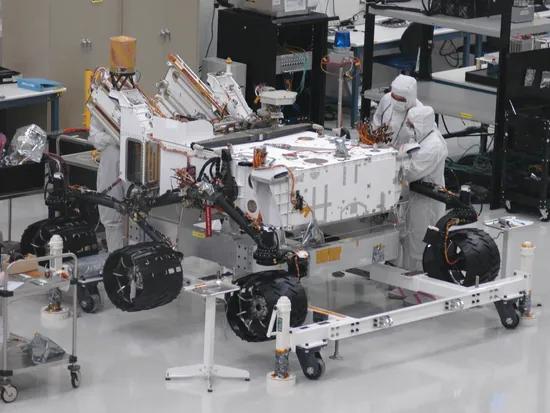
Engineering & Robotics
The pleasure of building something that moves, lights up or computes, and knowing why it works
Careers, for example
Robotics engineer, Mechatronics engineer, and Drone engineer
Jobs of the future
Every career in your result has three demand marks: for 2030, 2040 and 2050. Here is where public forecasts say the job market is heading.
- 2030Strong growth
- DevOps engineer
- AI/ML engineer
- Robotics engineer
- Satellite engineer
- 2040Strong growth
- Cybersecurity specialist
- AI implementation specialist
- Mechatronics engineer
- Aerospace engineer
- 2050Strong growth
- Quantum engineer
- AI ethics specialist
- Astronaut
- Physical therapist
Growing
Shrinking
Our estimate based on public forecasts. The 2030 marks rely on employer surveys and official statistics; the 2040 and 2050 marks extend long-term trends and may change.
Method and sources
Where the test comes from and how the result is scored
- What it measures
- The original "Career Compass" model: interest in 20 fields, self-rated strengths in eight areas and preferred work conditions add up to a field score, and within each field careers are matched by strengths, conditions, willingness to study and demand outlook. Built on Holland's theory, Klimov's classification and O*NET models. Questions written by the Prisamor editors.The test looks at career choice from three angles, the way career counselors do: what you like doing, what you are good at and the conditions you work best in. Interests are measured across 20 specific fields, strengths across eight abilities, and work conditions and values through your choices in situations.
- How it is scored
- Each activity is rated from 0 to 4, and each choice in a situation adds points to the fields and conditions of that option. A field score is 65% interest, 20% how well your strengths match what the field needs and 15% how well the conditions match. Within a field, careers are ranked by strengths, conditions, how long you are willing to study and the demand outlook. Your top career is the best match in your leading field among careers where demand does not fall by 2040.
- Reliability
- 40 activities, two for each of 20 fields
- 16 statements about eight strengths
- 14 situations with four options each
- Five answer options for activities and strengths
- Not validated on a separate sample, no norms
- Limitations
- This is an original Prisamor method: the questions were written by our editors and the item set has not yet been validated on a separate sample, so there are no norms. Strengths here are your self-assessment, not a measured ability. The 2030 outlook relies on employer surveys and official statistics, while the 2040 and 2050 marks are estimates based on trends such as automation, an aging population and the shift to clean energy. The test helps you narrow down options and decide what to try in real life; it is not a diagnosis and does not make the choice for you. If you want the classic RIASEC code, there is a separate Holland code test.
- What the model is built on
- The idea that work is more satisfying when its tasks match a person's interests is at the heart of John Holland's theory of vocational types (1959, final version 1997). Grouping fields by the object of work (nature, technology, people, sign systems, artistic images) comes from the classification by Russian psychologist Evgeny Klimov. The list of abilities and work values was checked against the Abilities and Work Values models of O*NET, the U.S. Department of Labor's occupational database. Demand forecasts draw on the World Economic Forum's Future of Jobs Report 2025 and the U.S. Bureau of Labor Statistics Employment Projections 2025-2035.
- Sources
- Holland, J. L. (1959). A theory of vocational choice. Journal of Counseling Psychology, 6(1), 35-45. DOI 10.1037/h0040767
- Holland, J. L. (1997). Making Vocational Choices: A Theory of Vocational Personalities and Work Environments (3rd ed.). Odessa, FL: Psychological Assessment Resources.
- Klimov, E. A. (1996). Psikhologiya professional'nogo samoopredeleniya [The psychology of professional self-determination]. Rostov-on-Don: Feniks.
- National Center for O*NET Development. O*NET Content Model: Abilities, Work Values. U.S. Department of Labor, Employment and Training Administration.
- World Economic Forum (2025). The Future of Jobs Report 2025. Geneva: World Economic Forum.
- U.S. Bureau of Labor Statistics (2026). Employment Projections 2025-2035.
- Nye, C. D., Su, R., Rounds, J., & Drasgow, F. (2012). Vocational interests and performance: A quantitative summary of over 60 years of research. Perspectives on Psychological Science, 7(4), 384-403. DOI 10.1177/1745691612449021
- Low, K. S. D., Yoon, M., Roberts, B. W., & Rounds, J. (2005). The stability of vocational interests from early adolescence to middle adulthood: A quantitative review of longitudinal studies. Psychological Bulletin, 131(5), 713-737. DOI 10.1037/0033-2909.131.5.713
Who it suits
- High school students choosing subjects, college or a trade
- College students who doubt their major
- Adults thinking about a career change
- Anyone who doesn't know what they want to do
Practical Value
- A short list of careers to try out
- A clear view of which fields appeal to you and which do not
- Demand outlook and entry path for every career
- Related growing careers in place of declining ones
How to choose a career and test your choice
Choosing a career comes down to three questions: what you like doing, what comes naturally to you and the conditions you work best in. Career counselors look at each one separately and then put them together. The test on this page does the same, and instead of a type or a code it ends with actual careers and where they are heading. It is useful when you have no idea what you want to do, or when you are torn between a few options.
How the career test works
There are 70 questions, and they take about 12 minutes. Forty of them are activities, two from each of 20 fields, such as "calculate how to put a satellite into orbit" or "cook a new dish for a big group of guests". You rate how interesting each one is on a five-point scale. The questions never name a job, only the activity, so your answer does not depend on whether you have heard of the career.
Sixteen statements are about your strengths: logic, words, visual thinking, working with your hands, people skills, stamina, accuracy and leading others. The remaining 14 questions are situations with four options each. They reveal what matters more to you: money or purpose, stability or variety, an office or the open road. The last one asks how long you are willing to study.
20 fields of work, from classic careers to new ones
The fields bring together areas that usually live in separate quizzes: software and artificial intelligence, engineering and space, energy and construction, transportation, medicine and science, education and helping people, design and media, business, finance and sales, food and hospitality, beauty, nature and public safety. Each field has careers with different entry paths, from a few months of training to medical school and residency.
That is why a machine learning engineer can show up in the same result as a chef or an electrician. It is not a glitch. The test compares you with every field and shows where you match most, without sorting work into "prestigious" and "ordinary".
Job outlook for 2030, 2040 and 2050
Every career in your result carries three demand marks, from strong growth to strong decline. The 2030 marks are based on the World Economic Forum's Future of Jobs Report 2025, where employers across 55 economies estimated which roles will grow or shrink, and on the U.S. Bureau of Labor Statistics Employment Projections 2025-2035. Our editors extended the 2040 and 2050 marks along long-term trends: automation and AI, an aging population, the shift to clean energy and the growing space industry.
Read the outlook as a direction, not a guarantee. A decline does not mean a job will vanish; more often the tasks inside it change. The test only names a top career where demand holds up through 2040, and for declining careers it suggests a related growing one that uses the same interests.
A career test for high school students
In the early high school years you choose subjects and start weighing college, a trade school or going straight to work. The result helps narrow things down: each career shows its entry path, and each field lists school subjects and small experiments you can try before you apply. Seniors can use the same result to shortlist majors.
Teenage interests are still settling and become more stable closer to 18-20. So it pays to retake the test a year later and compare your leading fields: if they stay the same, you can trust the direction more. The result is also a good starting point for a talk with parents, turning "where should I apply?" into a conversation about specific careers.
A career test for adults
Adults tend to arrive with a different question: not "what should I be?" but "where do I go from here?". Often a job wears you down not because of the team or the pay but because of the tasks themselves. The test shows which activities genuinely interest you and which conditions suit you, which helps you decide whether to change careers completely or simply change roles.
You rate your strengths based on what you have already proven at work, so experience counts in your favor. Look at careers with short entry paths, where a course is enough, and at those next to your current one. If your current career faces a decline by 2040, the result suggests where to move with the same interests.
How it differs from the Holland code test
John Holland's theory describes six types of career interests and sums them up in a three-letter RIASEC code. In Russian career guidance, the classic counterpart is Evgeny Klimov's classification of jobs by the object of work: nature, technology, people, sign systems and artistic images. Both models are well studied, and both underpin this test.
The difference is in the detail. Five or six types point to a direction, while here you get 20 fields, your strengths and work conditions, and in the end specific careers with a demand outlook. If you specifically want your Holland code, there is a separate test for it that answers its own, narrower question.
What to do after the test
Pick three or four careers from your result that make you curious and find out more about each: what a typical day looks like, where people train for it and how long it takes. The best check is a real try: a free intro course, a club, volunteering, a day shadowing a professional or a small weekend project of your own.
If the interest is still there afterwards, that is a good sign. If it fades, go back to the compass: your second and third fields often point the way just as well as the first. And in a few months, once you have new experience, you can take the test again.
Frequently asked questions
What is the most accurate career test?
No career test can give you an accuracy percentage: it works with your answers, not with your future life story. A good test names its method and sources, covers every scale evenly and explains where its result comes from. Here each field gets two activities and several situation choices, and your top career shows which of your answers pushed it up. The test doesn't measure real knowledge or ability; it takes your word for them.
Can I take a career test online for free?
Yes, this one is completely free. Your top career, the field compass, 10 careers with an outlook, your strengths and next steps all open right after your last answer. There are no paid sections and no course sales. You can save the result to your account and come back to it later.
At what age should students take a career test?
The questions make sense from about age 13-14, and they describe activities rather than job titles. A good time to start is middle or early high school, when you pick subjects and think about college or a trade. Interests still shift in the teenage years, so it is worth retaking the test a year later and comparing your leading fields.
Does the test work for adults changing careers?
Yes, and work experience helps: when you rate your strengths, you can rely on what you have already tested on the job. Look beyond your top career at the ones close to what you do now. If your current career is losing demand by 2040, the result suggests a related growing one you can move into without starting from scratch, and each entry path shows whether a short course is enough or you need a degree.
Which jobs will be in demand in 2030-2050, and which will AI replace?
According to the World Economic Forum's Future of Jobs Report 2025, the fastest-growing roles through 2030 are in data and AI, cybersecurity and renewable energy, while the most new jobs in absolute numbers go to farmworkers, delivery drivers, nurses and care workers. The steepest declines are among cashiers, bank tellers, data entry clerks and administrative assistants. Our 2030 marks rely on that report and on BLS projections; the 2040 and 2050 marks are our estimates from trends, and the further out they go, the less certain they are. More often AI changes the tasks within a job than wipes the job out.
How is this different from the Holland code test?
Holland's theory sorts interests into six types and gives you a three-letter RIASEC code. Russian career guidance has a similar classic by Evgeny Klimov with five types based on the object of work: nature, technology, people, sign systems and artistic images. Both ideas underpin this test, but the result here is more specific: 20 fields, strengths and work conditions, ending in actual careers with a demand outlook. For the RIASEC code itself, take our separate Holland code test.
Can your birth date or astrology tell you which career to choose?
Research finds no link between your birth date and the career you will succeed in. What does matter is how well your interests fit the work: a review of 60 years of studies linked that fit to both performance and staying in the chosen field (Nye and colleagues, 2012). That is why this test asks what you enjoy and what you are good at, not what the stars say.
What if the result doesn't match my dream job?
Treat it as a reason to check, not a verdict. Find your dream field on the compass and see what held it back: interest in the activities, strengths or conditions. Strengths can be built. Try the dream job in practice, even one day shadowing someone who does it, and take the test again in a few months.
Find your career
Twelve minutes and 70 questions. At the end you get your top career and why it fits, your leading fields out of twenty and the job outlook for 2030, 2040 and 2050. Free, with results right away.
Free, no sign-up needed.